
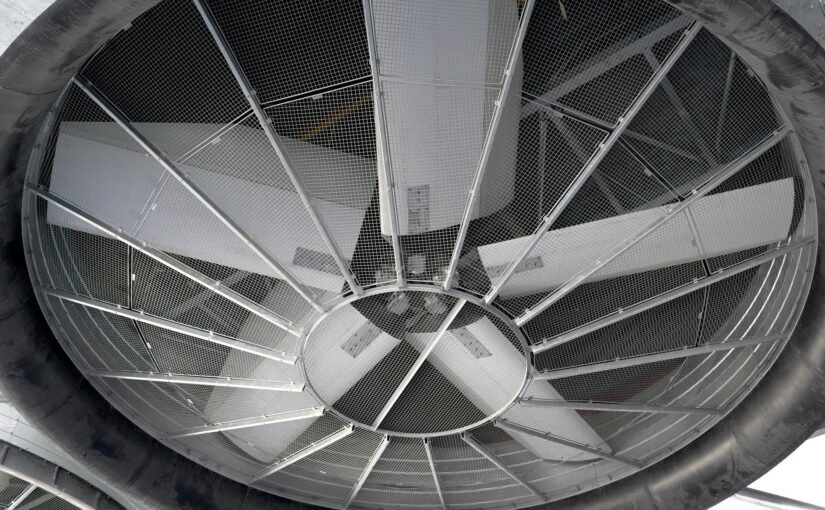
Poor ventilation rarely announces itself as a specification problem. Instead, it shows up as uneven temperatures, lingering odors, moisture buildup along walls and ceilings, or a fan that runs constantly without actually clearing the air. These symptoms feel like equipment issues, but they usually trace back to the point where the fan was selected without enough technical input. A commercial fans supplier with genuine expertise prevents these problems in four specific ways, starting long before installation.
Accurate Fan Sizing Prevents Capacity and Space Mismatches
The most common source of airflow problems is a mismatch between a fan’s capacity and the space it serves. CFM ratings, static pressure, motor type, and duct configuration all need to align with actual conditions, not just square footage. An experienced supplier calculates static pressure against the real duct run rather than estimating from floor area, which catches mismatches before they’re built into the system.
Take a warehouse with long duct runs: that layout creates more resistance than an open manufacturing floor with minimal ductwork, so it needs a fan capable of overcoming higher static pressure to move the same volume of air. A supplier without that technical grounding tends to recommend based on what’s in stock or what sold last time, which is exactly how specification mismatches become part of the system from day one.
Application-Specific Evaluation Leads to the Right Equipment Choice
Technical expertise changes the conversation before a single product gets discussed. Instead of opening with a catalog, an experienced supplier asks what’s being exhausted, how large the space is, what the duct run looks like, and what code requirements apply. Each answer narrows the decision: a kitchen exhausting high heat and grease points toward a different motor type than a warehouse managing dust and fumes. That upfront evaluation helps decision-makers choose between a direct drive fan, an inline duct fan, or a roof exhaust unit, rather than settling for something technically functional but wrong for the environment it’s placed in.
Correct Specifications Reduce Energy, Maintenance, and Replacement Costs
Sizing a fan correctly the first time prevents a chain of costs that otherwise builds over months. Undersized fans may operate continuously while still failing to deliver the required airflow, which shortens motor life and drives up energy consumption. Oversized fans waste power and create unnecessary noise. Either error also tends to produce secondary effects: contaminants that linger longer than they should, discomfort in poorly ventilated areas, and maintenance calls that become more frequent over time. Getting the specification right at the outset keeps these costs from ever starting, rather than requiring a fix after the fact.
Facility Layout Analysis Helps Eliminate Uneven Airflow
Layout awareness addresses a subtler problem: uneven airflow across a facility. A supplier who understands layout can identify when a space needs multiple smaller units instead of one large fan, a distinction that’s easy to miss without hands-on ventilation experience. Recognizing why duct length affects fan selection more than most buyers expect, or why a single large fan can leave dead zones in an irregularly shaped facility, is what keeps a technically adequate system from still underperforming in practice.
Technical Specification Builds Reliable Airflow From the Start
Each of these outcomes traces back to the same principle: reliable ventilation performance is built at the specification stage, not fixed after installation. A commercial fans supplier with genuine technical expertise prevents sizing errors, long-term cost increases, and uneven performance by addressing them before equipment is ever installed.
Prevent costly airflow problems by getting the specification right from the start. Brooklyn Fan & Blower Sales Company brings more than a century of technical experience and access to leading manufacturers to help businesses evaluate airflow requirements, select the right fan, and avoid sizing, performance, and layout issues before installation. Contact us for expert guidance tailored to your facility.