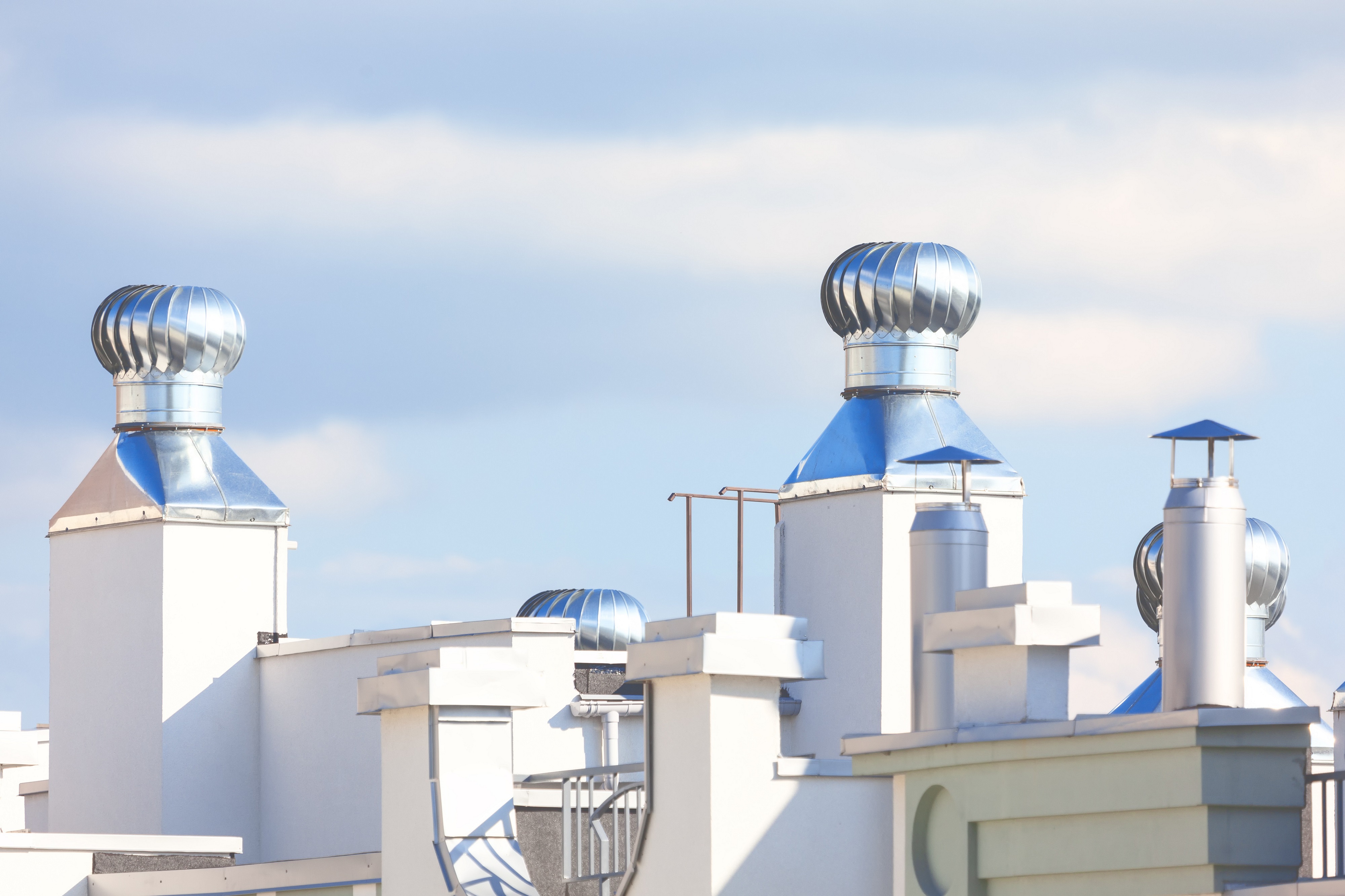
Most facilities have exhaust fans. Fewer have a deliberate pressure strategy behind them. That distinction matters more than many operators realize because the way industrial exhaust fans are sized, positioned, and balanced against supply air directly determines the pressure condition the building operates under, and each condition produces meaningfully different outcomes for air quality, contamination control, and operational performance.
Negative Pressure Is Created When Exhaust Exceeds Supply
When industrial exhaust fans remove more air than is mechanically supplied, the space operates under negative pressure. This pulls air inward through any available opening, which is deliberately used in facilities where containment is the goal.
Paint booths, chemical processing areas, isolation rooms, and facilities handling hazardous fumes are designed around negative pressure because inward airflow direction prevents contaminants from migrating to adjacent spaces or escaping through doorways and penetrations. The trade-off is that without a controlled makeup air source, replacement air enters through uncontrolled gaps, bringing unconditioned outside air, dust, and contaminants with it.
Positive Pressure Is Created When Supply Exceeds Exhaust
When supply air volume exceeds exhaust capacity, the space operates under positive pressure, pushing air outward through every gap and opening in the building envelope. This outward pressure acts as a continuous barrier against outside air infiltration.
Clean manufacturing environments, food processing facilities, pharmaceutical production areas, and electronics assembly spaces use positive pressure to prevent outside contaminants from reaching sensitive production zones. The exhaust system in these facilities is sized specifically to allow supply to maintain the positive differential without over-pressurizing the envelope to the point of causing door resistance or structural stress at penetrations.
Exhaust Fan Configuration Determines Which Condition You Get
The pressure condition a facility operates under is the direct result of how industrial exhaust fans are sized relative to supply air, not an incidental outcome. A facility with high-capacity roof exhaust and minimal mechanical supply drifts toward negative pressure. Strong supply capacity with modest exhaust creates positive pressure. The balance point between them determines where the actual operating pressure lands.
This is why industrial exhaust fan selection cannot happen independently of the supply side. Specifying exhaust capacity without knowing supply air volume, entry points, and building envelope characteristics produces a pressure condition by default rather than by design.
Variable speed drives on exhaust fans add meaningful control here, allowing exhaust capacity to adjust in response to changing supply conditions and maintain a target pressure differential rather than a fixed exhaust rate regardless of operating conditions.
At Brooklyn Fan & Blower Sales Company, we supply industrial exhaust fans suited for both negative and positive pressure ventilation strategies. Contact us to discuss your facility’s pressure requirements and find the right configuration for your application.
Frequently Asked Questions
Q1. What is the difference between negative pressure and positive pressure ventilation?
Negative pressure ventilation occurs when industrial exhaust fans remove more air than is supplied, pulling air inward through openings. Positive pressure ventilation occurs when supply air exceeds exhaust volume, pushing air outward to help prevent outside contaminants from entering the space.
Q2. Why is negative pressure used in certain industrial facilities?
Negative pressure is commonly used in environments handling hazardous fumes, chemicals, smoke, or airborne contaminants. It helps contain contaminated air within a controlled area by preventing it from migrating into adjacent spaces or escaping through openings.
Q3. How do industrial exhaust fans affect building pressure conditions?
Industrial exhaust fans directly influence building pressure by determining how much air is removed compared to how much supply air enters the facility. Fan sizing, airflow balance, and variable speed control all affect whether the building operates under negative, positive, or neutral pressure conditions.